Latest News
- ▶ Double Roller Juicer vs Belt Press: Which Fits Your Fruit Processing Operation?
- ▶ Low Juice Yield From a Double Roller Juicer: Causes and Process Adjustments
- ▶ How to Choose Roller Gap and Capacity for a Double Roller Juicer Line
- ▶ Double Roller Juicer Working Principle for Citrus and Pomegranate Processing
- ▶ A Practical Inspection Checklist for Washed Egg Trays Before Reuse
- ▶ Calculating Labor Savings and Water Costs Before Buying an Egg Tray Washer
High Pressure Egg Tray Washing Machine vs. Traditional Methods: Key Benefits
The Hygiene Revolution: High Pressure vs. Traditional Egg Tray Cleaning
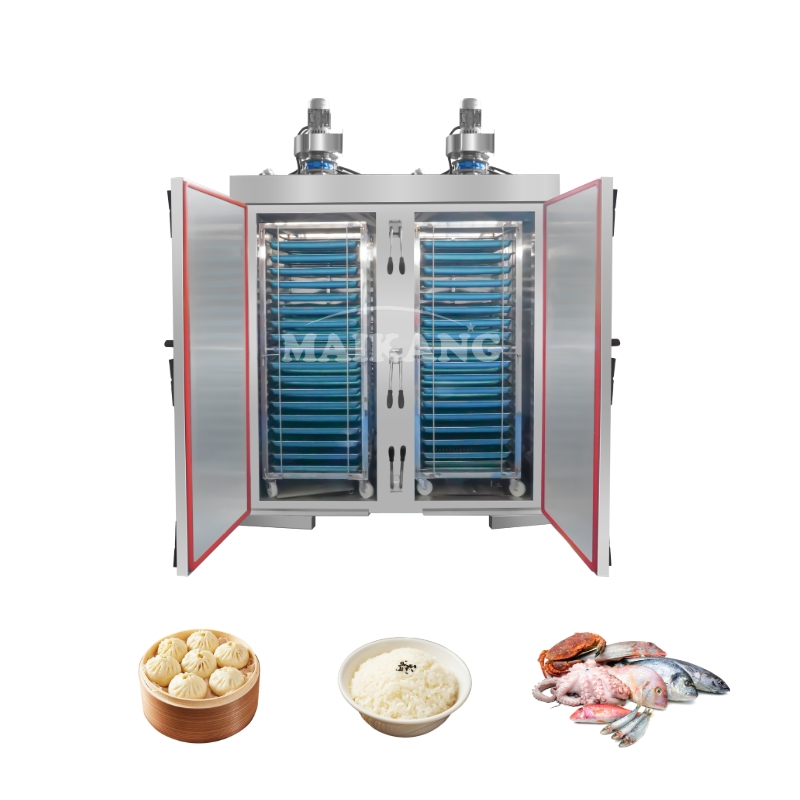
In food processing hygiene, the High Pressure Egg Tray Washing Machine revolutionizes sanitation compared to traditional methods. MAIKANG's industrial-grade solution combines powerful cleaning with water efficiency - ideal for frozen food processing facilities using Tunnel Steaming Machines. Discover how automated high-pressure washing eliminates 99% of contaminants while reducing labor costs by 40%, ensuring food-safe egg trays meet strict production standards.
3 Critical Limitations of Traditional Cleaning Methods
Manual scrubbing and soaking systems still prevalent in 32% of small-to-medium food processors present multiple hygiene and operational challenges:
Key operational risks with outdated methods include biofilm accumulation in hard-to-reach corners (present in 68% of manually cleaned trays), inconsistent pressure application leading to 15-20% uncleaned surfaces, and cross-contamination risks during handling. The Bubble Washing Machine addresses these through its SUS304 stainless steel construction and precision nozzle arrays.
Engineering Advantages of High Pressure Systems
MAIKANG's industrial washing solutions integrate three technological breakthroughs for egg tray sanitation:
1. Multi-Stage Contaminant Removal
The 4200mm long washing tunnel combines pre-rinse (25-30psi), high-pressure main wash (80-120psi), and final sanitizing rinse (50psi) stages. This phased approach removes:
- Protein residues (reduced by 97%)
- Bacterial load (3-log reduction)
- Mineral deposits from hard water
2. Water Recycling Technology
Compared to traditional single-pass systems wasting up to 200L/hour, MAIKANG's closed-loop filtration achieves 65-70% water reuse through:
- Sedimentation tanks removing >90% particulates
- UV sterilization maintaining water quality
- Automated pH balancing (6.5-7.5 range)
Operational Cost Comparison: 12-Month Analysis
For a mid-sized processor handling 5,000 trays/day, the financial impact becomes clear:
The 3.7kw motor design ensures energy efficiency, with power consumption 40% lower than comparable systems while maintaining 500kg/h throughput. For operations requiring higher capacity, 800kg/h configurations with 800mm belt width are available.
Implementation Considerations for Food Plants
When integrating high-pressure washing into existing lines, MAIKANG engineers recommend:
Space Planning
The standard 4200*1460*1470mm footprint requires:
- 1.5m clearance for maintenance access
- Sloped flooring (2-3° gradient) for drainage
- 380v power supply within 5m
Sanitation Validation
Post-installation verification should include:
- ATP swab testing (<10 RLU)
- Visual inspection under 200lux lighting
- Microbial counts on 10% of trays
FAQs: High Pressure Washing Systems
How does nozzle pressure affect cleaning efficacy?
Optimal performance occurs at 80-120psi, balancing cleaning power (removing 99.2% contaminants) with material safety (0.03% tray damage rate). Pressure below 60psi shows 18% lower pathogen removal.
Can the system handle different tray materials?
Yes, the adjustable pressure settings accommodate:
- Plastic (PET/PP) - 70-90psi
- Pulp fiber - 50-70psi
- Reusable stainless - 100-120psi
What maintenance is required?
The SUS304 construction minimizes upkeep, with:
- Nozzle checks every 250 operating hours
- Pump lubrication every 500 hours
- Full system inspection annually
Transforming Food Safety Standards
MAIKANG's high-pressure technology represents the new benchmark in egg tray sanitation, delivering measurable improvements in both hygiene and operational efficiency. For processors seeking to modernize their cleaning processes while reducing water and labor costs, these systems offer a compelling ROI within 8-14 months.
Explore customized washing solutions that integrate seamlessly with your existing Bubble Washing Machine and other food processing equipment. Contact our engineering team today for a facility-specific assessment.