What Is A Tunnel Steaming Machine?
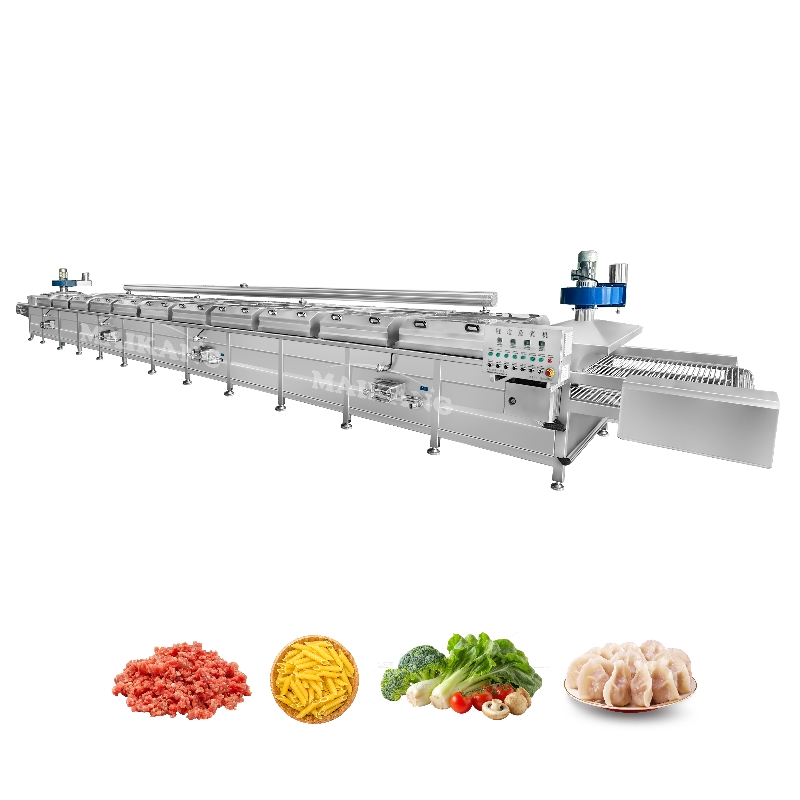
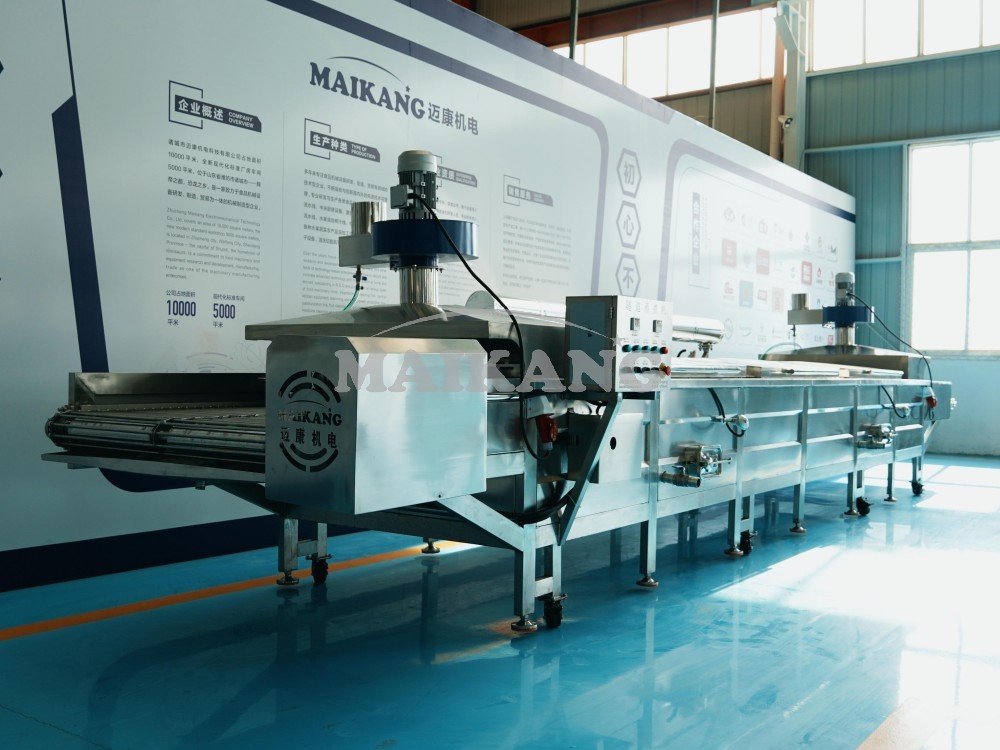
A Tunnel Steaming Machine is a specialized industrial equipment used in the food processing industry to steam large volumes of food products uniformly. It consists of a conveyor system that moves food products through a steam-filled chamber, ensuring even heat distribution and consistent cooking or sterilization.
These machines are designed to handle various food products, including vegetables, seafood, meat, and frozen foods. They are widely used in industries such as ready-to-eat meals, frozen food production, and canned food manufacturing.
Tunnel Steaming Machines are built to meet strict hygiene and safety standards, making them indispensable in modern food processing plants. They are available in different sizes and configurations to suit specific production needs.
How Does A Tunnel Steaming Machine Work?
The operation of a Tunnel Steaming Machine involves a continuous conveyor belt that transports food products through a steam chamber. The steam is generated by boilers and evenly distributed throughout the chamber to ensure uniform cooking or sterilization.
The temperature and humidity inside the chamber are carefully controlled to achieve the desired results. Advanced models come with automated controls to adjust parameters such as steam pressure, temperature, and conveyor speed.
The efficiency of a Tunnel Steaming Machine depends on its design, including the length of the steam chamber, the type of conveyor system, and the quality of steam distribution. Proper maintenance is crucial to ensure optimal performance and longevity.
Types Of Tunnel Steaming Machines
Tunnel Steaming Machines can be categorized based on their design and application. Common types include batch steamers, continuous steamers, and modular steamers. Each type has its own advantages and is suited for specific production requirements.
Batch steamers are ideal for small-scale operations where products are processed in batches. Continuous steamers, on the other hand, are designed for high-volume production with a constant flow of products. Modular steamers offer flexibility and can be customized to fit different production lines.
Choosing the right type depends on factors such as production capacity, product type, and available space. Manufacturers like Zhucheng Maikang Mechanical and Electrical Technology Co., Ltd. offer a range of options to meet diverse needs.
Key Considerations For Selecting A Tunnel Steaming Machine
When selecting a Tunnel Steaming Machine, food manufacturers must consider several factors to ensure optimal performance and return on investment. These include production capacity, energy efficiency, ease of maintenance, and compliance with food safety standards.
Production capacity is a critical factor, as it determines the throughput of the machine. Energy efficiency is another important consideration, as steam generation can be energy-intensive. Look for machines with advanced insulation and heat recovery systems to reduce operational costs.
Ease of maintenance is essential to minimize downtime and ensure consistent performance. Machines with accessible components and automated cleaning systems are preferable. Compliance with food safety standards, such as HACCP and ISO, is non-negotiable for food processing equipment.
Applications Of Tunnel Steaming Machines
Tunnel Steaming Machines are used in a wide range of food processing applications. They are commonly employed for blanching vegetables, cooking seafood, sterilizing meat products, and thawing frozen foods. The versatility of these machines makes them a valuable asset in any food production facility.
In the ready-to-eat meal industry, Tunnel Steaming Machines ensure that products are cooked uniformly and meet quality standards. In frozen food production, they help in thawing and pre-cooking products before further processing. The ability to handle different product types makes them indispensable in modern food processing.
Zhucheng Maikang Mechanical and Electrical Technology Co., Ltd. provides customized solutions to meet the specific needs of different food processing applications. Their expertise in the field ensures that clients get the most suitable equipment for their operations.
Future Trends In Tunnel Steaming Technology
The future of Tunnel Steaming Machines is shaped by advancements in automation, energy efficiency, and smart technology. Manufacturers are increasingly integrating IoT-enabled controls to monitor and optimize machine performance in real-time.
Energy efficiency remains a key focus, with innovations such as heat recovery systems and low-energy steam generation. These advancements not only reduce operational costs but also align with global sustainability goals.
Smart technology is also transforming maintenance practices, with predictive analytics and remote diagnostics becoming standard features. These trends ensure that Tunnel Steaming Machines will continue to evolve, offering greater efficiency and reliability for food manufacturers.
 Tunnel Steaming Machine for meat processing: where it fits in thermal treatmentTunnel Steaming Machine for meat processing helps deliver uniform thermal treatment, better yield, and smoother line integration. Learn where it fits and how to choose the right system.
 How Does a Vegetable Spray Washer Improve Cleaning Efficiency for Leafy Greens?Vegetable spray washer improves leafy green cleaning with uniform spray coverage, gentler handling, and consistent hygiene—discover how it boosts efficiency and product quality.
 Vegetable Cleaning Line Layout Tips for Fresh-Cut Salad Processing FacilitiesVegetable cleaning line layout tips for fresh-cut salad facilities: improve hygiene zoning, drainage, drying, and workflow to boost food safety, efficiency, and expansion readiness.
 Tunnel Steaming Machine: Key Parameters That Affect Food SafetyTunnel Steaming Machine for food processing: learn the key safety parameters behind uniform heating, steam penetration, dwell time, and hygienic design for safer, more stable production.