Latest News
- ▶ What conveyor width means for tray washing machine throughput
- ▶ Why trays come out dirty at the corners after washing
- ▶ How final rinse temperature affects tray drying performance
- ▶ Choosing a tray washing machine for baked-on residues
- ▶ When tray washing machine capacity is too low for a line
- ▶ Is automated container cleaning worth it for returnable packaging?
What Does a Vegetable Dicing Line Actually Do on a Fresh-Cut Packing Floor in 2026?
In 2026, a Vegetable dicing line is no longer just about cutting—it’s the intelligent heart of fresh-cut packing floors, delivering precision, food safety, and throughput in one integrated system. Paired with advanced Vortex washing machines for residue-free pre-cut cleaning and high-speed French fry cutters for consistent frozen-ready output, MAIKANG’s automated solutions empower processors to meet rising demand without compromising quality. As a trusted Chinese manufacturer since 2014, we engineer these lines for global procurement teams, distributors, and forward-thinking fresh-cut brands seeking reliability, scalability, and ROI-driven automation.
What Exactly Happens on a Modern Fresh-Cut Dicing Floor?
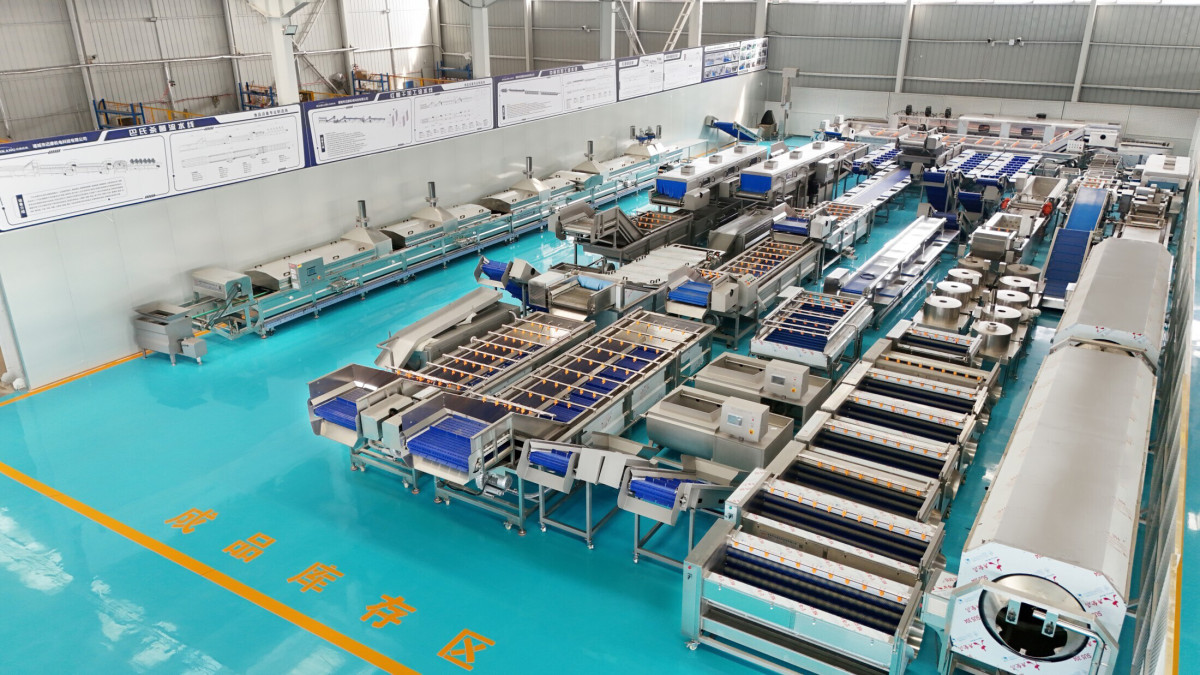
A vegetable dicing line isn’t a single machine—it’s a synchronized ecosystem. From raw intake to sanitized, uniformly diced, and ready-to-pack produce, every stage must uphold strict hygiene, dimensional accuracy, and throughput consistency. In 2026, top-tier lines integrate inline vision inspection, real-time moisture monitoring, and adaptive blade calibration—reducing waste by up to 12% and increasing yield consistency across seasonal variances.
Critical sub-processes include pre-washing (often using vortex or air-agitated tanks), optional blanching or acid dip, precision dicing (with ±0.3mm tolerance), post-dice rinsing, centrifugal drying, and metal detection. Each step demands seamless handoff—and that’s where supporting infrastructure like pallet sanitation becomes non-negotiable. For instance, contaminated logistics pallets can reintroduce pathogens into sterile zones. That’s why forward-looking facilities pair their dicing lines with fully automated Logistics Pallet Washer units to close the hygiene loop.
Unlike legacy batch washers, modern systems operate continuously at 90 EUR-pallets/hour (1200×1200mm and larger), with heated washing at stable 65–85°C, multi-angle high-pressure spray (top, bottom, and dual-side nozzles), and built-in water filtration that cuts freshwater consumption by over 90%. This isn’t auxiliary—it’s foundational to HACCP-compliant operations.
How Does It Fit Into Your End-to-End Processing Workflow?
Three Key Integration Points
- Pre-line hygiene assurance: Incoming pallets carrying bulk vegetables must be sanitized before entering the staging area—especially critical when sourcing from multiple farms or co-packing partners.
- Post-dicing packaging integrity: Clean, dry, and disinfected pallets ensure zero cross-contamination during final packaging, labeling, and cold-chain loading.
- Audit-ready traceability: With optional data logging, each pallet batch carries timestamped records of temperature, pressure, cycle duration, and detergent concentration—meeting BRCGS, SQF, and FDA FSMA 21 CFR Part 11 requirements.
The Logistics Pallet Washer supports modular customization—including Sterilization Model (with UV-C + ozone integration) and Oversized Model (for custom timber or plastic composite pallets)—making it adaptable for both high-volume co-packers and specialty organic brands scaling across EU, US, and ASEAN markets.
Technical Performance You Can Verify—Not Just Promise
Below is how MAIKANG’s Logistics Pallet Washer compares against industry benchmarks for continuous-duty food-grade sanitation:
This performance isn’t theoretical—it’s validated across 47 installations in food & pharma warehousing since Q3 2023. All units use SUS 304 stainless steel construction, PLC + touchscreen control with preset programs for grease, biofilm, or dried sap residues, and IoT-ready firmware for remote diagnostics and predictive maintenance alerts—cutting unplanned downtime by an average of 37%.
Why Procurement Teams, Distributors & Brands Choose MAIKANG
Since 2014, MAIKANG has delivered over 1,200 food processing systems to clients across 32 countries—with 91% repeat order rate among distributors and 86% of new clients citing “technical transparency” and “modular scalability” as decisive factors. We don’t sell standalone machines—we deliver interoperable process modules engineered for your specific throughput, compliance framework, and expansion roadmap.
For procurement professionals: We provide full FAT/SAT documentation, 3D layout integration support, and delivery timelines locked within 12–16 weeks for standard configurations. For distributors: Our OEM/ODM program includes localized training, spare parts inventory planning, and joint go-to-market kits aligned with regional certifications (e.g., CE, NSF, Halal). For end brands: Every system ships with audit-ready digital logs, bilingual operation manuals, and lifetime firmware updates—no subscription fees.
Ready to validate compatibility with your current dicing line, warehouse footprint, or food safety plan? Contact us today for a free process mapping session—including pallet flow simulation, water balance analysis, and ROI projection based on your actual annual volume and labor cost structure.
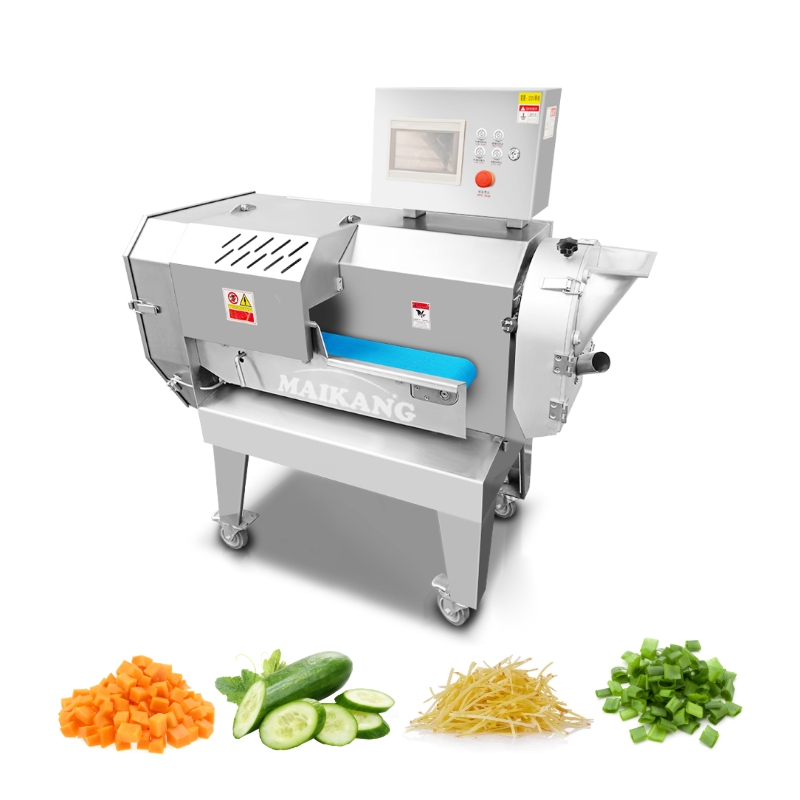
 Double-head Multifunctional Vegetable Cutter
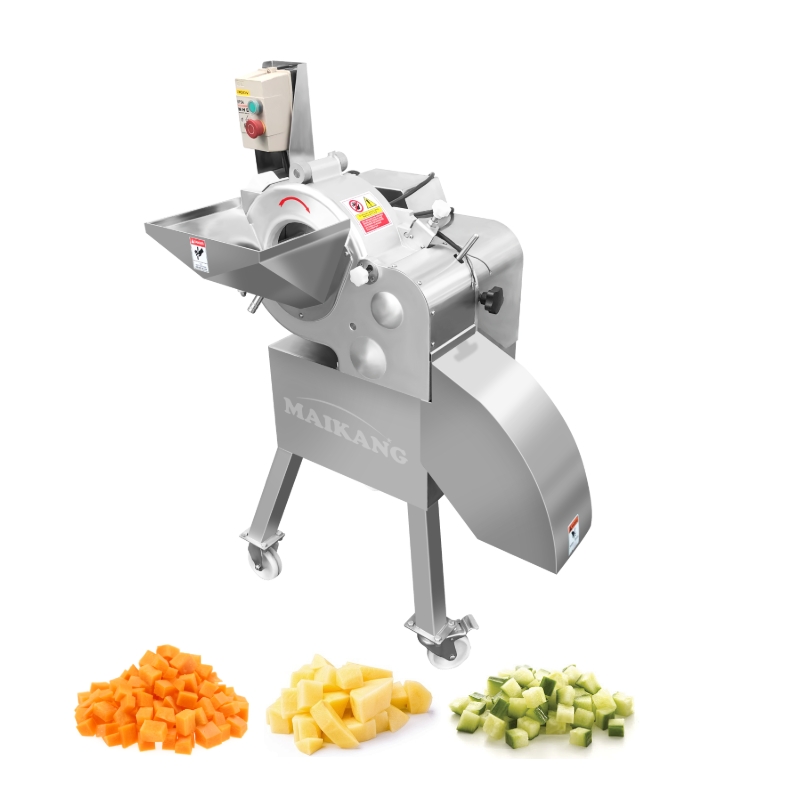
- Fruit & Vegetable Dicing Machine
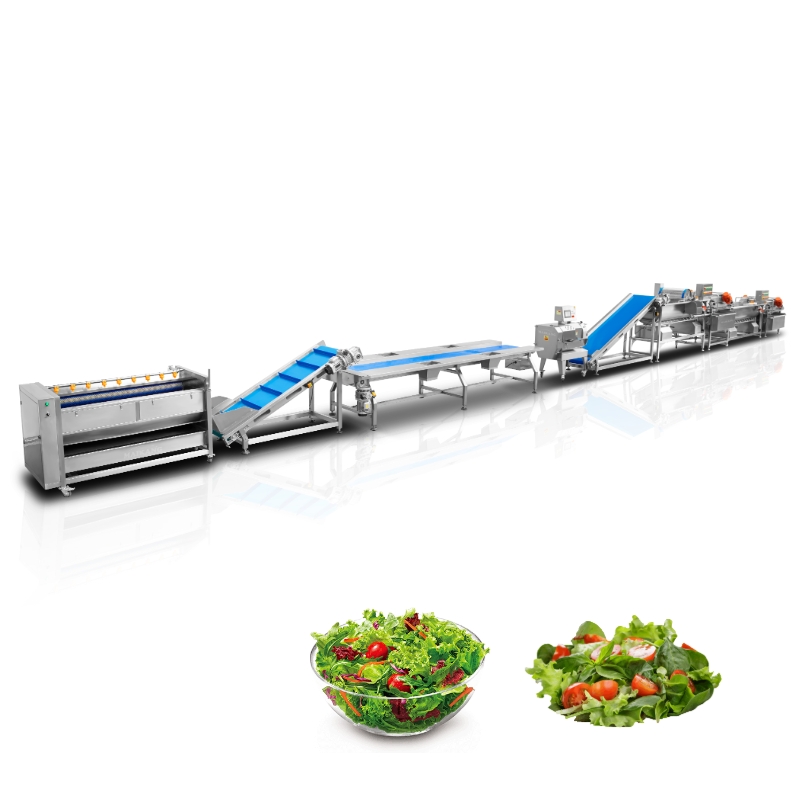
- Processing Lines for Salads and Leafy Greens