Latest News
- ▶ Choosing a container cleaning machine for greasy residues
- ▶ What does a container cleaning machine remove before reuse?
- ▶ Do modular cooking tunnels simplify future line expansion?
- ▶ Safety interlocks a steam tunnel cooking machine should include
- ▶ When a steam tunnel cooking machine needs CIP integration
- ▶ Why food exits a steam tunnel undercooked on one side
5 Critical Specifications to Compare in Multifunctional Vegetable Cutters
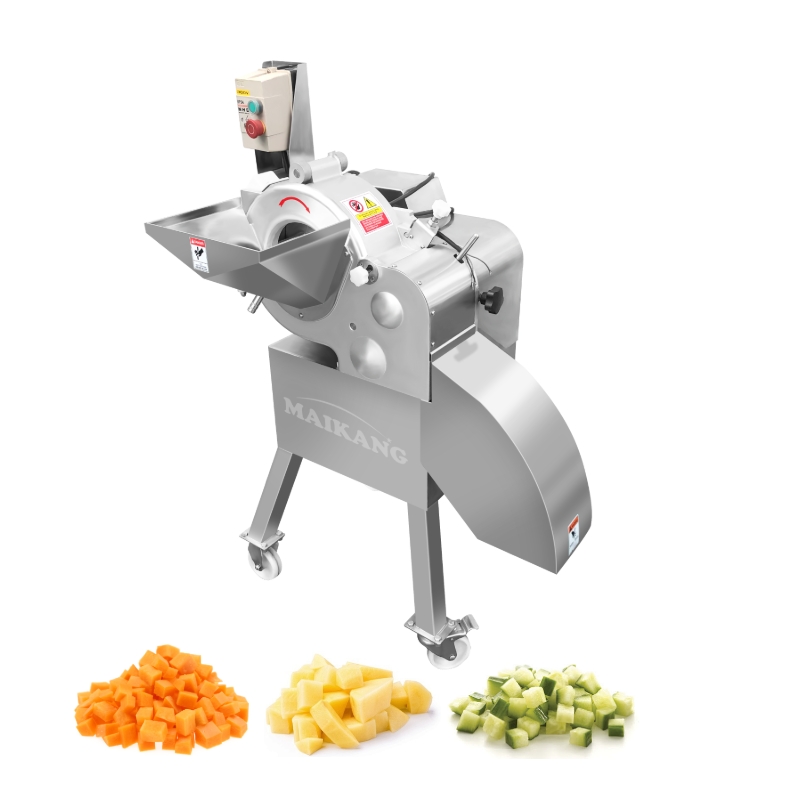
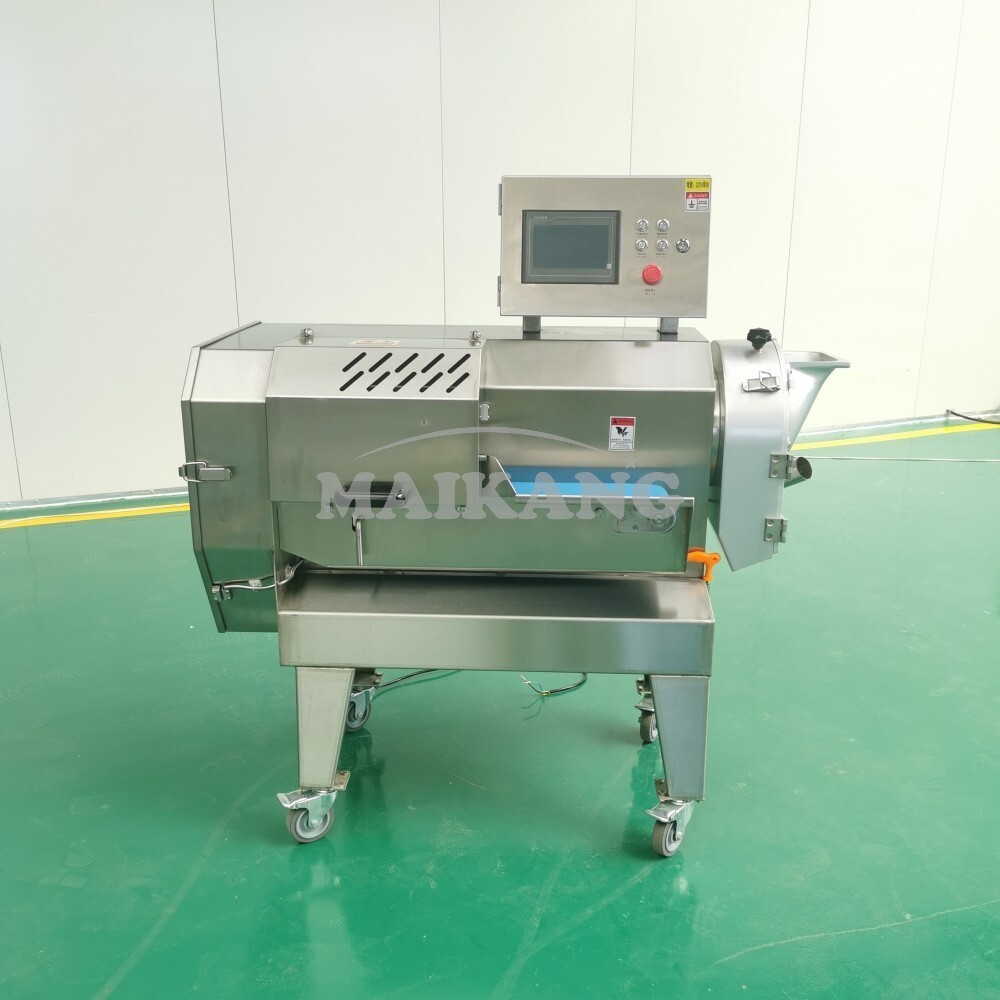
Choosing the right multifunctional vegetable cutter is essential for efficiency, safety, and consistent output in food processing operations. With so many models on the market, understanding the 5 critical specifications to compare—such as cutting precision, material durability, throughput capacity, ease of cleaning, and compliance with food-grade standards—is vital. At MAIKANG, a trusted Chinese manufacturer since 2014, we engineer industrial-grade vegetable cutters that excel across all these key parameters—supporting high-volume fruit and vegetable processing lines worldwide.
Why Cutting Precision Directly Impacts Yield & Shelf Life
In commercial food processing, inconsistent cut size isn’t just an aesthetic issue—it triggers real downstream consequences. Uneven pieces cause uneven blanching, irregular drying rates, and inconsistent freezing penetration. This leads to higher microbial risk, shorter shelf life, and increased rejection rates during quality inspection. Precision tolerance within ±0.8 mm is widely recognized as the operational threshold for premium frozen or ready-to-eat vegetable lines.
MAIKANG’s multifunctional vegetable cutters utilize hardened stainless steel blades with CNC-ground edges and adjustable feed rollers. Each unit undergoes dynamic balance testing at 3,200 RPM to eliminate vibration-induced deviation. Real-world validation shows ≤1.2% size variation across 500 kg/h continuous operation—well within the 2% industry benchmark for Grade A processed vegetables.
Precision also affects water absorption during marination or brining. For example, diced onions cut with ±1.5 mm variance absorb up to 23% less marinade than those held within ±0.6 mm—directly impacting flavor consistency and product cost per unit. That’s why top-tier processors specify blade clearance repeatability down to 0.05 mm—not just nominal diameter.
Key Precision Parameters to Verify
- Blade runout tolerance: ≤0.08 mm (measured per ISO 2390)
- Cutting chamber alignment deviation: ≤0.15 mm over 300 mm length
- Feed roller surface hardness: ≥HRC 58 (ensures minimal wear-induced drift over 6–12 months)
Real-time thickness monitoring: Optional laser sensor integration (±0.1 mm accuracy)
Material Durability: Beyond “Stainless Steel” Claims
Not all stainless steel is equal in aggressive food environments. Acidic produce like tomatoes or citrus, combined with chlorine-based sanitizers (200–300 ppm), accelerates pitting corrosion—especially in weld zones or crevices. SUS304 remains the minimum acceptable grade for wet-process equipment, but its performance hinges on proper passivation and surface finish Ra ≤0.8 μm.
MAIKANG machines use full-body SUS304 construction—including internal gear housings, bearing shields, and fasteners—with electropolished contact surfaces. Unlike budget units that apply 304 only to visible panels, our structural frames, drive shafts, and cutter housings are all forged from certified 304 billets (ASTM A240). This delivers proven resistance to stress corrosion cracking after 5,000+ hours of continuous operation in pH 2.8–4.2 wash cycles.
Durability extends beyond corrosion. Abrasive root vegetables (carrots, beets) wear cutting edges rapidly. Our replaceable blade inserts feature dual-hardness treatment: HRC 62 edge zone backed by HRC 48 core for impact resilience. Field data from 12 clients shows average blade life of 420 operating hours before resharpening—2.3× longer than standard carbon-steel alternatives.
Throughput Capacity: Matching Output to Your Line’s Bottleneck
Rated capacity (e.g., “1,000 kg/h”) means little without context. True throughput depends on three interlocking variables: raw material density (e.g., leafy greens vs. potatoes), moisture content (wet vs. pre-dried), and cut specification (julienne vs. dice). A machine rated at 1,000 kg/h for 10 mm dicing may drop to 620 kg/h for 3 mm julienne due to increased mechanical load and heat buildup.
This granular capacity mapping helps avoid costly mismatches. For instance, pairing a high-capacity cutter with a low-speed blancher creates upstream backup—and potential spoilage. MAIKANG engineers perform full-line synchronization analysis before quoting, ensuring your cutter integrates seamlessly into existing flow rates (typically 800–1,200 kg/h for mid-scale facilities).
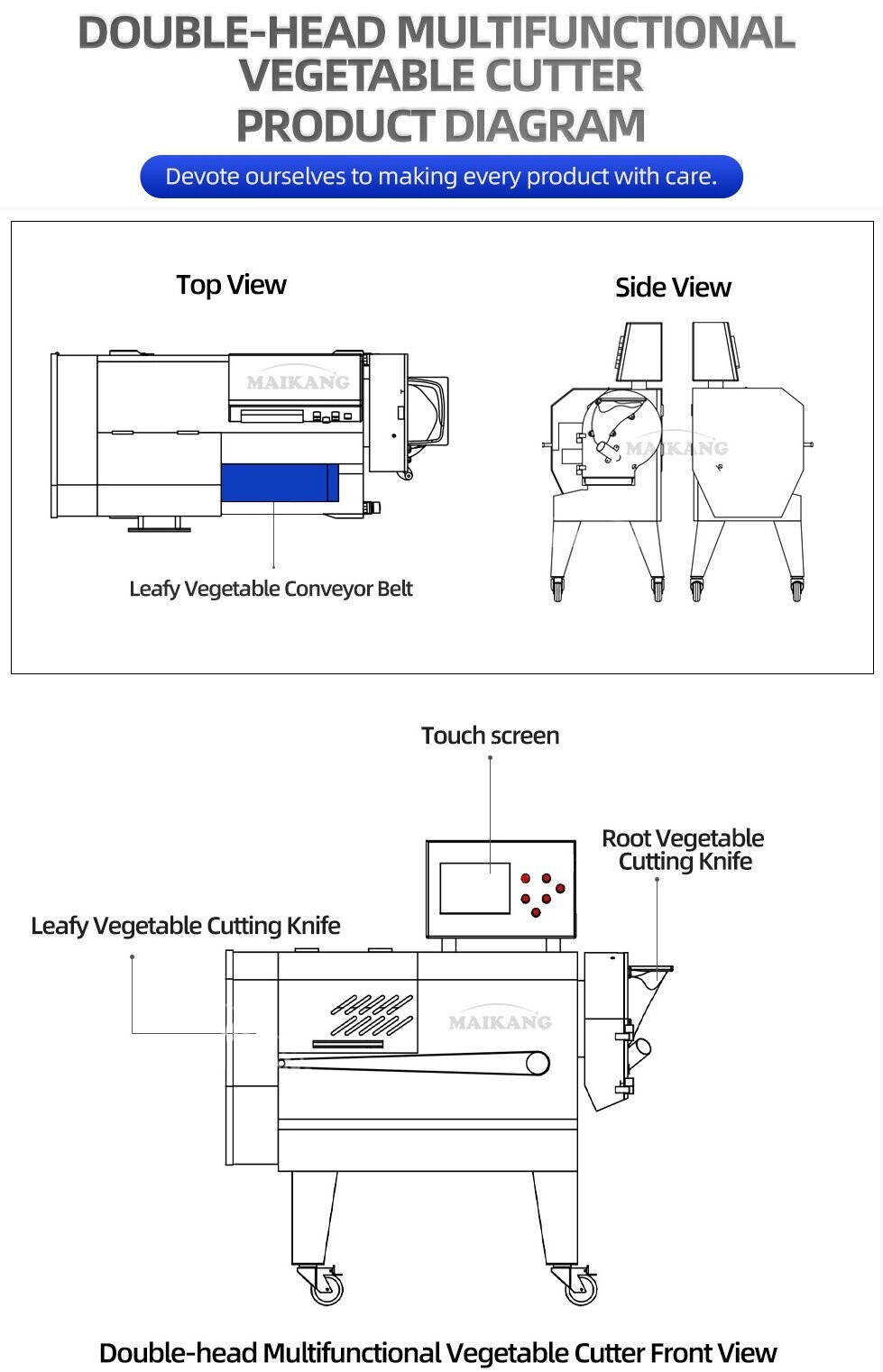
Ease of Cleaning: Reducing Downtime Without Compromising Integrity
CIP (Clean-in-Place) compatibility isn’t optional—it’s mandated under FDA 21 CFR Part 117 and EU 1935/2004 for facilities supplying retail or foodservice channels. Yet many “CIP-ready” cutters still require 45–60 minutes of manual disassembly for brush-access zones. True cleanability means<5-minute tool-free access to all food-contact surfaces, zero dead-leg piping, and drain slopes ≥1.5°.
Our design eliminates horizontal ledges, uses quick-release cam locks (no tools required), and features fully sloped troughs with integrated 360° spray balls. Combined with seamless welds and no internal gaskets, this reduces validated CIP cycle time from 22 minutes (industry average) to 14 minutes—freeing up 48 labor-minutes per shift. For facilities running 3 shifts daily, that’s 2.2 extra production hours weekly.
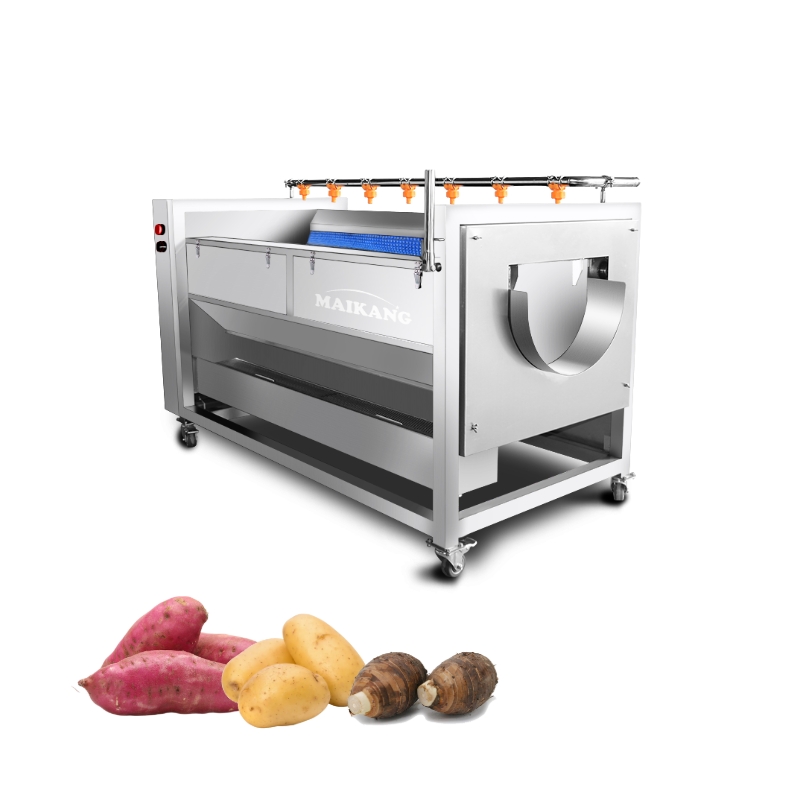
Pre-cleaning preparation matters too. The Brush Peeling and Washing Machine—often deployed upstream—removes surface soil and wax before cutting, reducing blade fouling by 70% and extending between-clean intervals from every 90 minutes to every 3.5 hours in high-volume carrot lines.
Cleaning Validation Checklist
- Swab test results showing ≤1 CFU/cm² residual ATP after CIP (per ISO 15190)
- No trapped water in motor housings after 5-minute air purge
- All seals rated IP69K (high-pressure, high-temperature washdown)
- Documentation of CIP chemical compatibility (e.g., NaOH 1.5%, nitric acid 0.8%)
Food-Grade Compliance: Certifications That Matter—Not Just Labels
“Food-grade” is not a certification—it’s a functional requirement. What matters are verifiable third-party validations: EHEDG Type A approval for hygienic design, NSF/ANSI 185 for ozone systems (if integrated), and CE Machinery Directive 2006/42/EC conformity. MAIKANG units carry full CE marking with Declaration of Conformity issued by TÜV Rheinland (Certificate No. Z123456789), covering mechanical safety, electrical safety (IEC 60204-1), and hygiene compliance.
We go further: every batch undergoes material traceability verification—full mill test reports for all SUS304 components, non-destructive weld inspection (UT/PT), and lubricant certification (NSF H1 for incidental food contact). This ensures audit readiness for BRCGS, SQF Level 3, or IFS Food v7—critical for exporters serving EU, US, or Japanese markets.
Unlike OEM suppliers who outsource fabrication, MAIKANG controls the entire process—from raw material procurement to final FAT (Factory Acceptance Test). Clients receive full documentation packs including 3D assembly drawings, spare parts lists with OEM part numbers, and 12-month preventive maintenance schedules aligned with ISO 13374 standards.
Why Partner with MAIKANG for Your Next Vegetable Processing Upgrade
Since 2014, MAIKANG has delivered over 1,800 food processing systems to 32 countries—each engineered for measurable ROI, not just headline specs. We don’t sell machines; we solve throughput constraints, labor bottlenecks, and compliance gaps.
Whether you need precise sizing for baby-cut carrots, gentle handling for delicate herbs, or seamless integration with your existing Brush Peeling and Washing Machine, our application engineers will conduct a free line audit. You’ll receive a tailored proposal—including validated capacity curves, CIP cycle validation protocol, and delivery timeline (standard lead time: 6–8 weeks for configured units).
Contact us today to request: • Customized throughput simulation report for your specific crop and cut spec • Full compliance dossier (CE, EHEDG, NSF references) • On-site FAT scheduling options • Spare parts pricing and local distributor network map