NEWS
Latest News
- ▶ Do modular cooking tunnels simplify future line expansion?
- ▶ Safety interlocks a steam tunnel cooking machine should include
- ▶ When a steam tunnel cooking machine needs CIP integration
- ▶ Why food exits a steam tunnel undercooked on one side
- ▶ How humidity control protects texture during steam cooking
- ▶ Choosing a steam tunnel cooking machine for delicate products
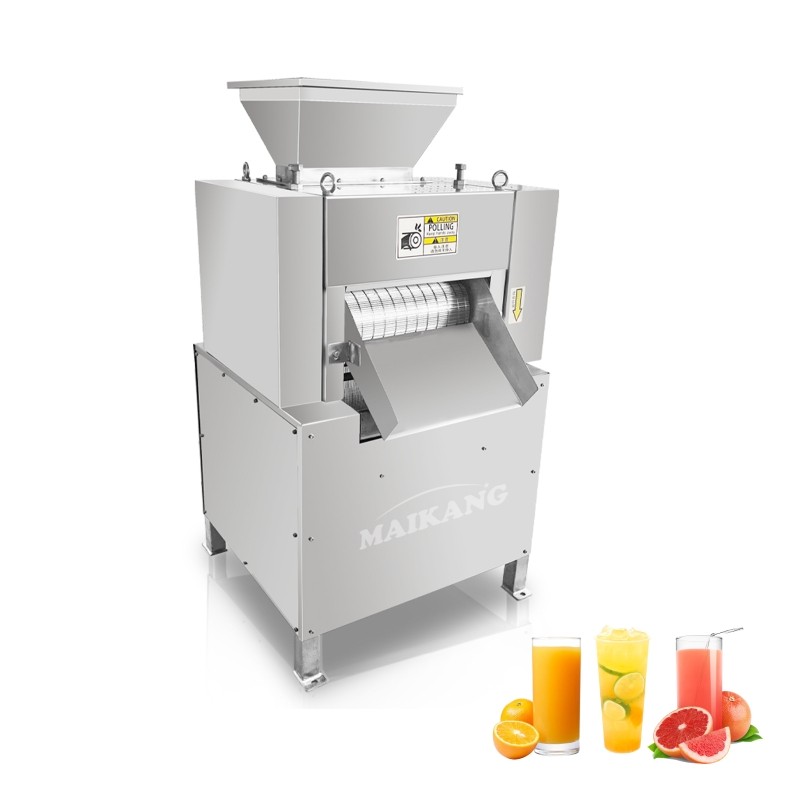
The Ultimate Guide to Double Roller Juicer
Introduction
In the modern industrial food processing and beverage manufacturing sectors, achieving maximum liquid extraction efficiency while maintaining continuous, large-scale throughput is a primary operational objective. As global demand for high-quality fruit juices, botanical extracts, and plant-based proteins scales upward, traditional extraction methods often encounter significant bottlenecks—particularly when processing high-volume or highly fibrous raw materials.
The industrial Double Roller Juicer has emerged as a foundational technology engineered specifically to overcome these challenges. Utilizing a high-torque, counter-rotating dual-roller mechanism, this heavy-duty machinery delivers immense mechanical pressure to continuously breach cell walls and release optimal yields of liquid phase from solid matrices.
Unlike batch-processing systems or standard centrifugal units, the industrial double roller juicer operates with an uninterrupted continuous feed, making it an indispensable asset for high-capacity production lines. Its robust engineering guarantees consistent performance under grueling operational schedules, reducing energy consumption per ton of processed material and delivering an exceptional return on investment (ROI) for global food factories, large-scale juice production plants, and B2B machinery importers.
Section 1: Mechanical Working Principle
The operational superiority of the industrial double roller juicer lies within its sophisticated, high-pressure mechanical design. Rather than relying on simple impact forces or slow friction, the equipment forces raw materials through a precisely calibrated compression zone located between two parallel, counter-rotating rollers.
       [Raw Material Input]
              │
              ▼
       ┌───┐     ┌───┐
       │ ↻ │ ──  │ ↺ │  <-- Mechanical Shearing & High-Torque Compression Zone
       └───┘     └───┘
         │         │
         ▼         ▼
  [Juice Liquid]  [De-watered Pomace/Cake]
As the raw biomass enters the feed hopper, it is drawn into the nip point of the rollers via automated gravity or forced screw feeding. The mechanical physics driving the extraction process can be broken down into three concurrent phases:
High-Pressure Counter-Rotation: The two heavy-duty cylinders turn inward toward one another at differential or synchronized speeds. This actions creates a massive, localized compressive force that instantaneous crushes the raw material, rupturing the cellular structures holding the internal liquids.
Mechanical Shearing: As materials pass through the minimum gap clearance, the surface profile of the rollers applies intense lateral shearing stresses. This mechanical shearing action tears apart resilient fibrous matrix networks, which is crucial for maximizing liquid release from tough botanical tissues.
Continuous Juice-Solid Separation: The crushed material is simultaneously squeezed and conveyed. The liquid phase flows downward through integrated perforated screens or drainage channels beneath the roller assembly, while the highly de-watered solid cake (pomace) is continuously discharged from the front end via heavy-duty scraper blades.
By maintaining precise control over roller gap clearance, hydraulic pressure, and rotational velocity, plant engineers can dial in the exact extraction profiles required for varying raw material moisture levels.
Read More: Step-by-Step Working Principle of a Commercial Double Roller Juicer
Section 2: Core Specifications & Technical Classification
Industrial double roller juicers are engineered across a broad spectrum of technical specifications to align with diverse production scales and material characteristics. The processing capacity, durability, and material compatibility of the machine are directly dictated by its foundational engineering metrics, including roller diameter, face length, motor power, and metallurgical composition.
To guide procurement managers in evaluating configuration options, the following technical parameter table represents the standard industrial classification lineup at Maikang Machinery:
Table 1: Industrial Double Roller Juicer Technical Specifications
Metallurgy, Surface Texture, and Hygiene Compliance
The selection of roller materials and surface geometries is critical to prevent premature equipment wear and to guarantee compliance with stringent international food safety regulations.
Rollers are manufactured using premium-grade alloys tailored to the chemical properties of the input materials. For highly acidic juices (such as citrus or specific botanical extracts), components are forged from high-grade SUS304 or SUS316 stainless steel to prevent galvanic corrosion and oxidation. Additionally, the roller surface textures are highly customizable:
Grooved Rollers: Designed with longitudinal or helical teeth to aggressively grip, tear, and feed slippery or highly fibrous crops like sugarcane and ginger roots.
Smooth Rollers: Engineered for fine-pressing stages where uniform pressure distribution is required to extract juice from softer fruits without pulverizing seeds or skins.
From an engineering perspective, heavy-duty processing machinery must also feature sanitary designs that facilitate rapid sanitation cycles. Maikang Machinery integrates specialized Clean-in-Place (CIP) spray assemblies and seamless weldments to eliminate bacterial harboring points, meeting strict global regulatory criteria for hygienic food machinery.
Read More: Industrial Double Roller Press Spec Guide: Roller Materials and Textures
Read More: Sanitary Design Standards for Heavy-Duty Extraction Equipment
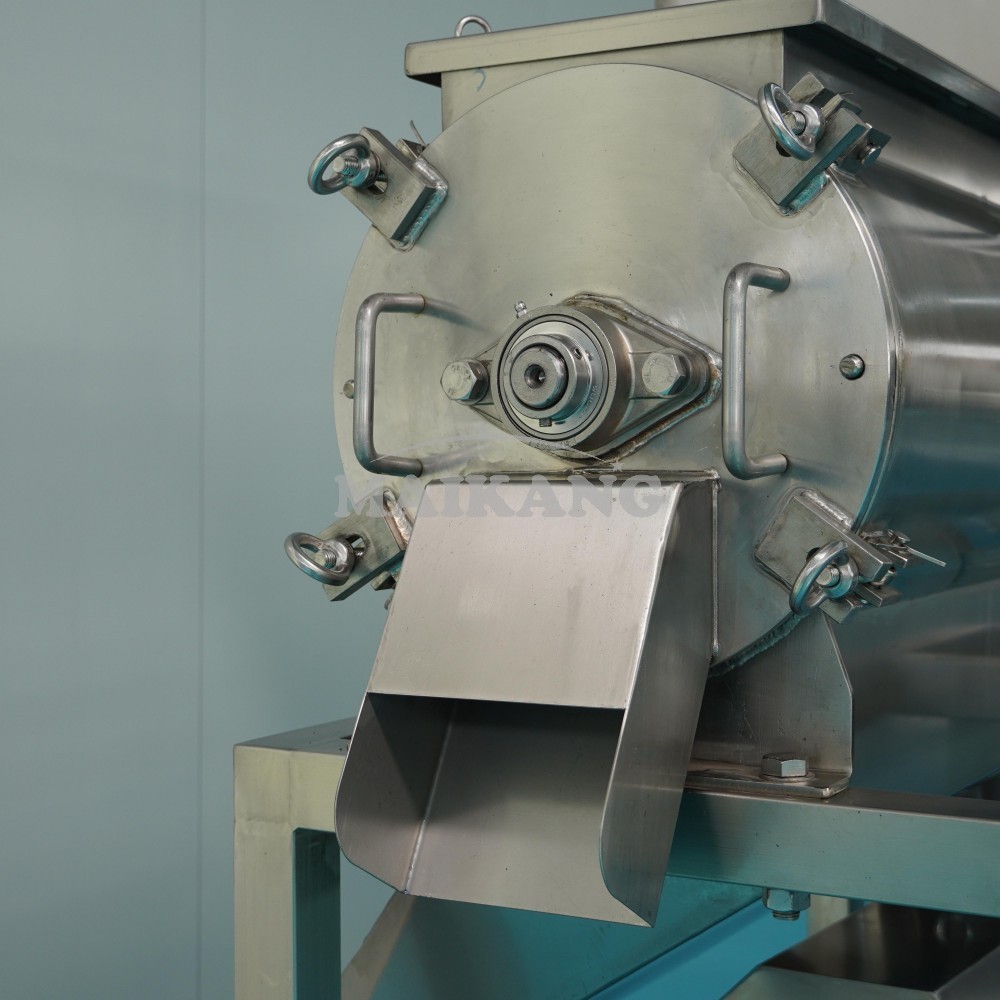
Section 3: Equipment Comparison: Double Roller vs. Other Technologies
Selecting the correct extraction machinery requires a clear understanding of how alternative industrial liquid-solid separation systems stack up against the double roller design. The most frequent comparison occurs between the double roller juicer and the traditional single or twin-screw press.
While screw presses are highly effective for specific applications, they operate on a friction-accumulation and axial compression model. The double roller juicer, conversely, relies on direct, perpendicular radial compression. The following matrix details the performance boundaries of both technologies across critical commercial indicators:
Table 2: Industrial Extraction Technology Comparison Matrix
The mechanical advantage of the double roller configuration becomes apparent when calculating long-term operational costs. Because the compression force is focused uniformly at the roller nip zone, the structural stress is distributed evenly across heavy-duty spherical roller bearings.
In contrast, screw presses subject their internal components to severe rotational friction along the entire length of the barrel, leading to rapid abrasive wear when processing gritty or fibrous materials. Furthermore, the double roller juicer maintains superior processing speeds and juice clarity without inducing excessive heat generation, protecting temperature-sensitive vitamins and enzymes from thermal degradation.
Read More: Double Roller Juicer vs. Screw Press: Which is Better for Industrial Yield?
Section 4: Industrial Applications & Material Suitability
The adaptability of the double roller juicer allows it to serve as a core processing hub across multiple industrial sectors, spanning from large-scale commercial beverage manufacturing to specialized agricultural byproduct de-watering.
                  ┌───────────────────────────────┐
                  │  Double Roller Juicer System  │
                  └───────────────┬───────────────┘
                                  │
         ┌────────────────────────┼────────────────────────┐
         ▼                        ▼                        ▼
┌──────────────────┐    ┌──────────────────┐    ┌──────────────────┐
│ Roots & Tubers   │    │ High-Fiber Crops │    │ Pomace De-Water  │
│ - Ginger         │    │ - Sugarcane      │    │ - Apple Pomace   │
│ - Carrots        │    │ - Sorghum        │    │ - Cassava Pulp   │
│ - Beetroots      │    │ - Sweet Stalks   │    │ - Herbal Residue │
└──────────────────┘    └──────────────────┘    └──────────────────┘
1. Root and Leafy Vegetable Processing
For dense, root-based crops such as ginger, carrots, and beetroots, traditional crushing equipment struggles with high structural resistance and rapid tool blunting. The double roller press handles these hard feedstocks effortlessly. The high-torque dual rollers fracture the dense root cells instantly, ensuring high initial yields in a single pass. Similarly, for leafy greens and celery, the roller nip zone applies uniform pressure that eliminates the "sponging" effect often seen in other press designs, where soft leaves compress but do not release their liquid phase.
Read More: Commercial Juicing Machine Applications for Roots and Leafy Vegetables
2. High-Fiber Agricultural Crops
Crops characterized by massive lignocellulose content—such as sugarcane, sweet sorghum, and various industrial hemp varieties—require extreme extraction force. The double roller juicer is uniquely suited for these applications. When fitted with aggressive, deep-grooved roller teeth, the machine shatters the outer rind of the stalk before executing deep-tissue compression. This optimized feeding and crushing dynamic ensures that juice extraction rates remain consistently high, preventing the raw material from slipping or backing up in the inlet hopper.
Read More: How to Optimize a Double Roller Juicer for High-Fibrous Sugarcane Extraction
Section 5: Selection & Customization Guide for Factories
Procuring industrial machinery requires careful engineering assessment to ensure the selected model integrates seamlessly into an existing production plant. For a B2B buyer, an off-the-shelf solution is rarely sufficient. Proper equipment selection must evaluate several critical variables:
Upstream Feed Characteristics: The physical dimensions, fiber length, and moisture percentage of the incoming material dictate whether the equipment requires automated hydraulic roller tensioning systems or a specialized gravity-feed chute.
Throughput and Volumetric Constraints: Processing plants must calculate peak hourly capacity requirements ($t/h$). Over-sizing a machine leads to unnecessary capital expenditure and idle energy usage, while under-sizing creates a severe operational bottleneck.
Downstream Integration: The double roller unit must align perfectly with existing conveyors, filtration systems, and CIP sanitation loops.
[Upstream Wash/Chop] ──> [Forced Screw Feeder] ──> [Double Roller Juicer] ──> [Vibrating Screen Filter]
                                                            │
                                                            └──> [Continuous Pomace Conveyor]
At Maikang Machinery, we specialize in supplying fully integrated, turnkey processing solutions. Our engineering department can customize structural components, including custom-designed feed hoppers with integrated pre-chopping blades, variable-frequency drives (VFD) for precision velocity management, and automated heavy-duty PLC control panels linked via Siemens or Allen-Bradley protocols. Whether your factory layout demands a space-saving vertical arrangement or a modular horizontal assembly, customized engineering ensures your line runs at maximum operational efficiency.
Read More: Double Roller Juicer Selection Guide for Large-Scale Food Factories
Read More: OEM/ODM Customization Options for Industrial Food Processing Machinery
Section 6: Maintenance, Troubleshooting & ROI
Maintaining a low Total Cost of Ownership (TCO) and maximizing industrial machine lifespan requires a structured preventive maintenance program. Given the immense mechanical loads borne by industrial double roller juicers, mechanical failure can cause costly unscheduled production downtime.
Preventive Maintenance Protocols
The primary points of inspection in any dual-roller setup are the roller surfaces and the main bearing assemblies. Heavy-duty spherical bearings must be lubricated via automatic greasing systems to dissipate heat and prevent particle contamination. Scraper blades, which clean the rollers continuously to prevent material buildup, must be checked weekly for alignment and wear. If scrapers are neglected, compacted material can glaze the roller surfaces, causing drop-offs in extraction pressure and overall liquid yield.
Read More: Industrial Juicer Maintenance: How to Extend Roller and Bearing Lifespan
Operational Troubleshooting
Even with rigorous maintenance, operators may occasionally encounter processing anomalies due to variations in raw crop characteristics. The two most common industrial challenges are roller slippage and material blockage:
Roller Slippage: Occurs when exceptionally slippery or high-pectin materials prevent the rollers from drawing the biomass into the nip point. This is resolved by adjusting the variable speed drive to lower the RPM, increasing surface friction, or adjusting the hydraulic pressure settings.
Material Blockage: Happens when massive, un-chopped solid mass overloads the feeding zone. Modern PLC control systems manage this automatically by detecting an amperage spike in the motor, triggering a momentary auto-reverse cycle to clear the blockage before resuming forward extraction.
Read More: Double Roller Juicer Troubleshooting: Solving Slippage and Blockage Issues
Section 7: Frequently Asked Questions
FAQ 1: What materials are best suited for an industrial double roller juicer?
Answer: Industrial double roller juicers are uniquely engineered for processing highly fibrous, dense, or tough materials that typically cause single-screw extruders or centrifugal systems to clog or stall. Ideal feedstocks include sugarcane, sweet sorghum, ginger root, carrots, beetroots, and crushed stone fruits. Additionally, it is highly efficient for industrial de-watering of spent brewer's grain, apple pomace, and herbal medicine extraction residues.
FAQ 2: How does a double roller juicer compare to a screw press extractor in terms of juice clarity?
Answer: The double roller juicer generally produces juice with a lower suspended solid content (higher clarity) when processing fibrous material. Because the compression force is applied perpendicular and instantaneously at the roller nip zone, it minimizes the intense grinding and twisting friction inherent to screw presses. Screw presses tend to pulverize fibers into fine micro-particles that pass through screens, resulting in a cloudier juice that requires heavy downstream filtration.
FAQ 3: What is the average lifespan of the rollers in heavy-duty juicing operations?
Answer: In continuous, high-volume industrial operations, a premium forged stainless steel roller (such as SUS304 or SUS316 supplied by Maikang Machinery) features an operational lifespan of 18,000 to 24,000 hours before requiring surface re-conditioning or texturing.
Conclusion & Call to Action
Investing in a highly engineered, heavy-duty Double Roller Juicer is a strategic decision that directly optimizes juice yields, reduces waste disposal costs via superior pomace de-watering, and secures long-term manufacturing competitiveness. For modern food factories and beverage producers, achieving reliable, high-throughput extraction requires robust machinery backed by world-class engineering expertise.
As a leading global manufacturer of industrial extraction machinery, Maikang Machinery combines deep technical knowledge with advanced manufacturing capabilities to deliver high-performance, tailored processing systems. Our equipment is built to withstand demanding operational conditions while maintaining exceptional food safety and hygiene standards.
Maximize your production line efficiency and elevate your processing capabilities today. Contact the technical engineering team at Maikang Machinery to request a comprehensive technical consultation, schedule material testing, or receive a complimentary, tailored project quotation.